
How Play Therapy Helps Children Express What They Can't Say
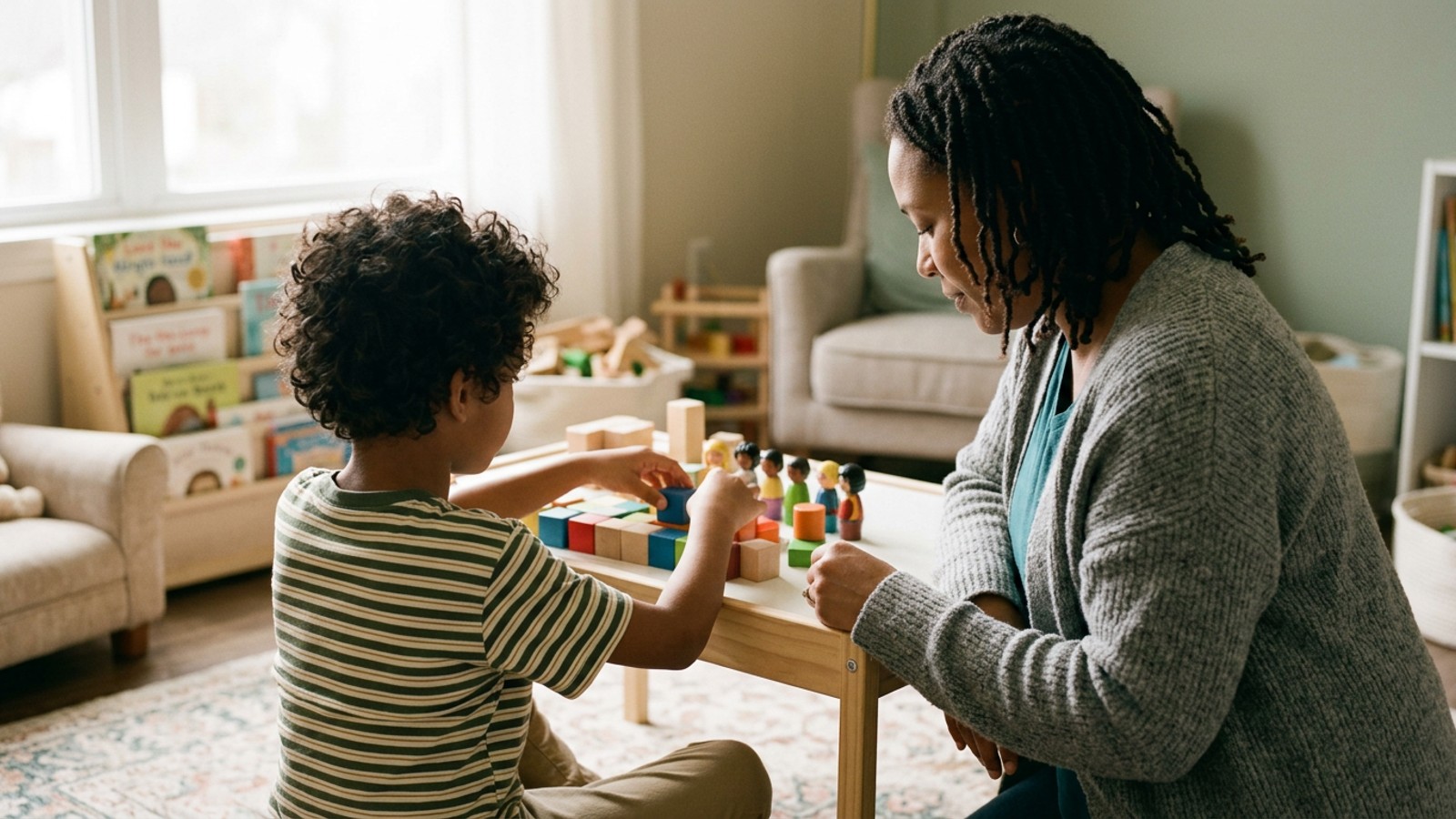
Play therapy is a structured form of counseling that uses play—a child's natural language—to help children express thoughts, feelings, and experiences they cannot yet put into words. For children under 11, abstract thinking and verbal expression are still developing, which means traditional talk therapy often misses the mark. Play therapy bridges that gap. Through carefully selected toys, art supplies, and guided activities, trained play therapists create a safe space where children communicate symbolically, working through challenges like anxiety, trauma, grief, and behavioral struggles without needing to find the "right" words.
As play therapy pioneer Dr. Gary Landreth famously observed, "Toys are children's words, and play is their language." Research supports this approach: a comprehensive meta-analysis of 93 studies found that children who received play therapy performed 0.80 standard deviations better than children without treatment—a practically significant improvement (Bratton et al., 2005). The American Psychological Association recognizes play therapy as an evidence-based treatment for children facing mental health concerns.
Why Can't Young Children "Just Talk" About Their Problems?
Young children experience the full range of human emotion—fear, anger, sadness, confusion—but their brains are still building the capacity to name, understand, and articulate those feelings. A five-year-old who witnessed a frightening event may not have the vocabulary to describe what happened or why they feel scared. A seven-year-old dealing with divorce may feel anger and sadness simultaneously but lack the emotional literacy to explain it. An eight-year-old with anxiety may only know that their stomach hurts before school, not that they're experiencing worry.
Children also face developmental barriers to verbal therapy. Their prefrontal cortex—the part of the brain responsible for organizing thoughts and expressing them coherently—is still maturing. Abstract concepts like "coping" or "processing grief" don't yet make sense. And many children, especially those who have experienced trauma, instinctively avoid talking about painful topics, either because they fear judgment, don't want to upset their parents, or simply can't access the memory in a way that translates to speech.
This is where play becomes essential. Play is concrete, action-based, and familiar. It allows children to show what they cannot say.
How Does Play Therapy Work?
Play therapy takes place in a specially designed space called a playroom, where a trained therapist provides carefully chosen materials: dolls, puppets, art supplies, sand trays, building blocks, costumes, and sometimes musical instruments or clay. These aren't random toys—they're selected to invite emotional expression, storytelling, and symbolic processing.
During a session, the child leads. In child-centered play therapy, the therapist follows the child's direction, observing and reflecting rather than directing the play. A child might create a family of stuffed animals and act out scenes of conflict, or bury superhero figures in the sandbox and then uncover them, symbolically working through feelings of being overwhelmed or needing rescue. Another child might paint chaotic, swirling colors to express anger, or carefully arrange toy figures to recreate a traumatic event from a safe distance.
The therapist interprets the child's play as communication. When a child repeatedly crashes toy cars together, they may be expressing aggression, frustration, or fear of chaos in their home life. When a child dresses up as a doctor and "heals" dolls, they might be processing a medical experience or asserting control in a situation where they felt helpless. The therapist helps the child explore these themes, offering observations like, "The little bear looks scared right now," which validates the child's feelings without forcing them to verbalize it directly.
Over time, this symbolic expression helps children externalize difficult emotions, gain perspective, and develop healthier ways to cope. The child begins to make connections between their play and their real-life experiences, often without needing explicit conversation about it.
What Issues Does Play Therapy Address?
Play therapy is effective across a wide range of childhood concerns. It helps children process trauma and post-traumatic stress disorder, whether from a single event like a car accident or ongoing adversity such as domestic violence or neglect. Children who have experienced loss—the death of a loved one, a parent's divorce, or a family move—can use play to grieve and adjust.
It's equally effective for anxiety and depression. A child with separation anxiety might act out scenarios where a parent leaves and returns, practicing and mastering the fear in a controlled setting. A child with generalized anxiety may build and rebuild structures, finding a sense of order and control. Children struggling with low self-esteem or social challenges benefit from play therapy's emphasis on mastery and relationship-building.
Behavioral concerns like aggression, defiance, and emotional dysregulation also respond well to play therapy. Rather than punishing or lecturing a child for acting out, play therapy helps them understand the feelings driving the behavior and practice new responses. Children with ADHD, autism spectrum disorder, and developmental delays can use play to improve emotional regulation, communication, and social skills in a developmentally appropriate way.
What Happens in a Typical Play Therapy Session?
Sessions typically last 30 to 50 minutes and occur weekly. At the start, the therapist welcomes the child into the playroom and establishes a few simple boundaries—usually around safety and respect for the space. From there, the child chooses what to play with. Some children dive into the sandbox or art table immediately; others need a few sessions to feel comfortable.
The therapist observes closely, noting patterns: Does the child always choose aggressive play? Do they avoid certain toys? Do they narrate their play aloud, or play in silence? These patterns reveal the child's inner world. The therapist reflects what they see—"You're working really hard to build that tower" or "That doll seems sad"—which helps the child feel seen and understood.
Over weeks and months, themes emerge. A child working through family conflict might repeatedly stage "good guy versus bad guy" battles, gradually shifting the endings toward resolution. A child coping with a parent's deployment might create reunion scenes with dolls. These shifts signal emotional progress.
Parents are typically not in the room during sessions, but therapists meet regularly with caregivers to share observations, provide guidance, and reinforce therapeutic progress at home. Some approaches, like filial therapy, actively train parents to use play therapy techniques, strengthening the parent-child bond and extending the benefits beyond weekly sessions.
How Is Play Therapy Different from Regular Playtime?
It's a question many parents ask: Isn't this just playing? What makes it therapy?
The difference lies in the structure, the training, and the intent. Play therapy is led by a licensed mental health professional with specialized training in child development, attachment, trauma, and play-based interventions. The playroom is designed to facilitate emotional expression, not just entertainment. The therapist actively observes, interprets, and responds therapeutically to what the child communicates through play.
Regular playtime at home is valuable, but it doesn't carry the same clinical framework. A trained play therapist recognizes when a child's play signals distress versus healthy development, knows how to gently challenge maladaptive patterns, and creates a therapeutic relationship built on safety and trust. The playroom becomes a contained space where difficult feelings can surface, be explored, and eventually integrated in ways that everyday play cannot replicate.
How Long Does Play Therapy Take?
The length of play therapy varies depending on the child's needs and the complexity of their challenges. Some children show significant progress in 8 to 12 sessions, particularly when addressing specific stressors like a recent loss or a behavioral concern. Others, especially those processing trauma or chronic stress, may benefit from several months to a year of consistent sessions.
Progress in play therapy is not always linear. A child may initially seem to "just play," then suddenly begin working through intense emotions in their sessions. Parents often notice changes at home—better sleep, fewer tantrums, improved mood—before the child explicitly talks about what they're learning in therapy.
Therapists regularly assess progress with parents and adjust the treatment plan as needed. The goal is always to help the child develop skills they can carry forward: emotional awareness, healthy coping strategies, and the ability to communicate their needs.
Who Can Benefit from Play Therapy?
Play therapy is most commonly used with children ages 3 to 12, though it can be adapted for younger toddlers and older pre-teens. It's particularly effective for children who:
- Are too young to engage in traditional talk therapy
- Have experienced trauma, abuse, or neglect
- Are dealing with grief, loss, or major life transitions
- Struggle with anxiety, depression, or emotional regulation
- Exhibit behavioral problems at home or school
- Have difficulty forming relationships or trusting adults
- Are on the autism spectrum or have developmental delays
- Have witnessed violence or lived in chaotic environments
Children don't need to be in crisis to benefit. Play therapy also supports kids navigating typical but challenging developmental milestones—starting school, adjusting to a new sibling, or managing friendship conflicts—when those transitions feel overwhelming.
How Can Parents Support Their Child in Play Therapy?
Parents play a critical role in their child's progress, even if they're not in the therapy room. Here's how you can support the process:
Trust the process. Your child may not want to talk about what happens in sessions, and that's okay. Play therapy works even when children don't narrate their experience.
Maintain consistency. Regular attendance matters. Missing sessions disrupts the therapeutic relationship and slows progress.
Communicate with the therapist. Share observations from home—new behaviors, improvements, or concerns. This helps the therapist adjust their approach.
Avoid grilling your child. Instead of asking "What did you do today?" try "I'm glad you had time with your therapist today." Let your child share if they want to, but don't pressure them.
Reinforce progress at home. If the therapist suggests strategies—like validating your child's emotions or offering choices—practice them consistently.
Be patient. Healing takes time. Some children improve quickly; others need weeks to feel safe enough to do the deeper work.
Getting Started with Play Therapy in Northern Virginia and Port St. Lucie
If your child is struggling to express what they're feeling, or if you sense they're carrying something they can't yet name, play therapy may be the bridge they need. At Life Enrichment Counseling Center, our trained play therapists work with children, adolescents, and families to support healing and growth from a holistic perspective. For more on the specific benefits play therapy can bring to your child's emotional development, read our post on the benefits of play therapy for children.
We offer in-person play therapy at our offices in Gainesville, Alexandria, and Haymarket, VA, as well as Port St. Lucie, FL, plus telehealth options for families across our service areas. To learn more or schedule a consultation with Dr. Beverley Boothe, Ph.D., MSW, LCSW, and our team, visit our contact page or call us at (703) 754-0636.
References
Bratton, S. C., Ray, D., Rhine, T., & Jones, L. (2005). The efficacy of play therapy with children: A meta-analytic review of treatment outcomes. Professional Psychology: Research and Practice, 36(4), 376–390. https://doi.org/10.1037/0735-7028.36.4.376
Association for Play Therapy. (n.d.). Play therapy makes a difference. Retrieved July 8, 2026, from https://www.a4pt.org/
Landreth, G. L. (2012). Play therapy: The art of the relationship (3rd ed.). Routledge.