
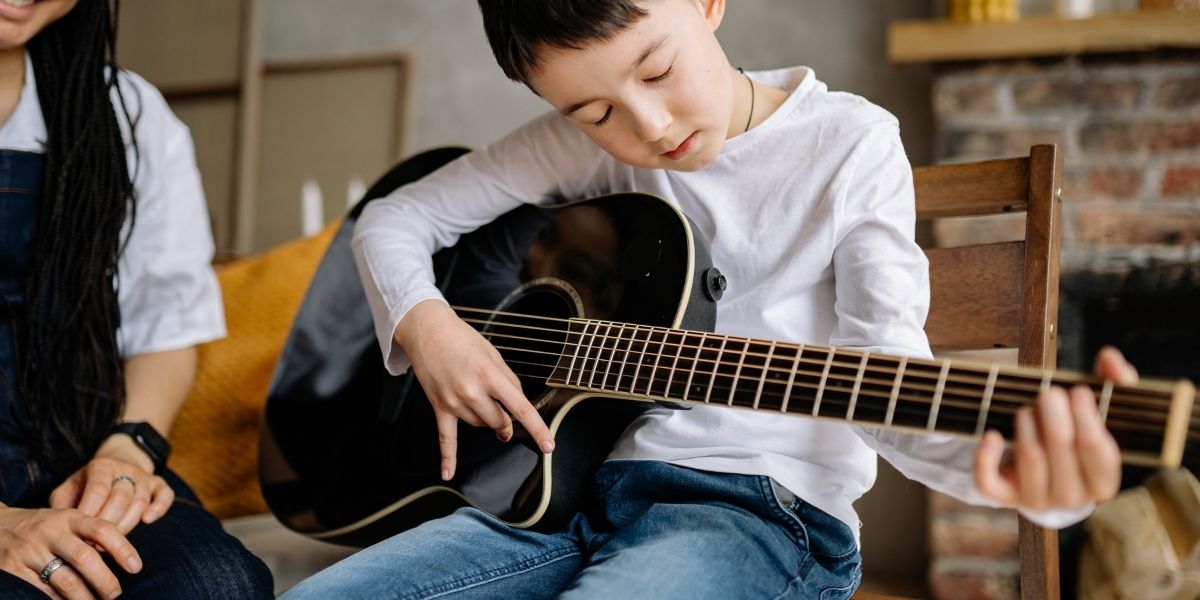
Music has been part of childhood for as long as families have gathered to sing, clap, and play together. Beyond enjoyment, music plays a meaningful role in how children grow, communicate, and relate to the world around them. Music therapy builds on this natural connection by using structured musical experiences to support developmental goals in a purposeful and research-informed way. Guided by trained professionals, music therapy uses rhythm, melody, and movement to meet children where they are and support growth across multiple areas.
Children process sound and rhythm from a very early age, often responding to music before they develop spoken language. This makes music therapy especially valuable for young children and those who benefit from alternative ways of learning and expressing themselves. Sessions are tailored to each child’s abilities, needs, and developmental stage, creating a safe and supportive environment where progress can unfold at a comfortable pace.
Music therapy is not limited to one skill or outcome. It supports emotional expression, communication, motor coordination, social connection, and cognitive development. For parents and caregivers seeking supportive approaches that feel natural and engaging in Gainesville, Haymarket and Alexandria, VA, music therapy offers a thoughtful blend of science, creativity, and compassion.
Supporting Emotional Expression and Regulation
Music gives children a voice when words feel hard to find. Through listening, singing, and playing instruments, children can express feelings such as joy, frustration, sadness, or excitement in ways that feel safe and manageable. Music therapy sessions often use tempo, volume, and melody to help children recognize and label emotions. Over time, children learn how different sounds reflect internal feelings, which supports emotional awareness. Structured musical activities also help children practice calming strategies, making it easier to manage strong emotions and build emotional balance.
Building Communication and Language Skills
Music therapy supports early communication by pairing words with rhythm and melody. Songs naturally repeat phrases, which helps children practice sounds, vocabulary, and sentence patterns. For children with speech or language delays, music offers consistent cues that support understanding and expression. Even nonverbal children can participate through gestures, instrument play, or vocal sounds. These shared musical moments create opportunities for turn-taking, listening, and expressive communication that carry over into everyday interactions.
Strengthening Cognitive Development and Learning
Music therapy supports attention, memory, and problem-solving skills. Learning songs involves sequencing, pattern recognition, and recall, all of which support early learning. Rhythm-based activities help children follow directions and stay focused for longer periods. Musical routines also support transitions, making it easier for children to move between activities. These cognitive benefits are woven into engaging experiences that feel playful while supporting important learning skills.
Supporting Motor Skills and Physical Coordination
Movement is a natural part of music therapy. Clapping, tapping, dancing, and instrument play support both fine and gross motor development. Rhythmic activities help children coordinate movements, improve timing, and build body awareness. For children working on physical coordination, music provides clear cues that guide movement in a motivating way. These activities support strength, balance, and coordination while encouraging active participation.
Creating Individualized and Inclusive Support
One of the strengths of music therapy is its flexibility. Sessions are shaped around each child’s interests, strengths, and needs. Therapists adjust activities to support children with developmental delays, sensory needs, or emotional challenges. Music therapy respects individual differences and offers an inclusive space where children can participate fully at their own pace. This personalized approach helps children feel understood and supported throughout their developmental journey.
Music therapy offers a compassionate and evidence-based approach to supporting child development across emotional, social, cognitive, communication, and physical domains. By meeting children through sound, rhythm, and movement, music therapy creates opportunities for growth that feel natural and engaging. These experiences help children build confidence, express themselves, and connect with others in meaningful ways. For families seeking supportive services that honor each child’s individuality in Haymarket VA, music therapy can be a valuable part of a well-rounded care plan. To learn more about how music therapy can support your child’s development, contact Life Enrichment Counseling Center today to schedule a consultation and explore personalized services designed to support your family’s goals.

