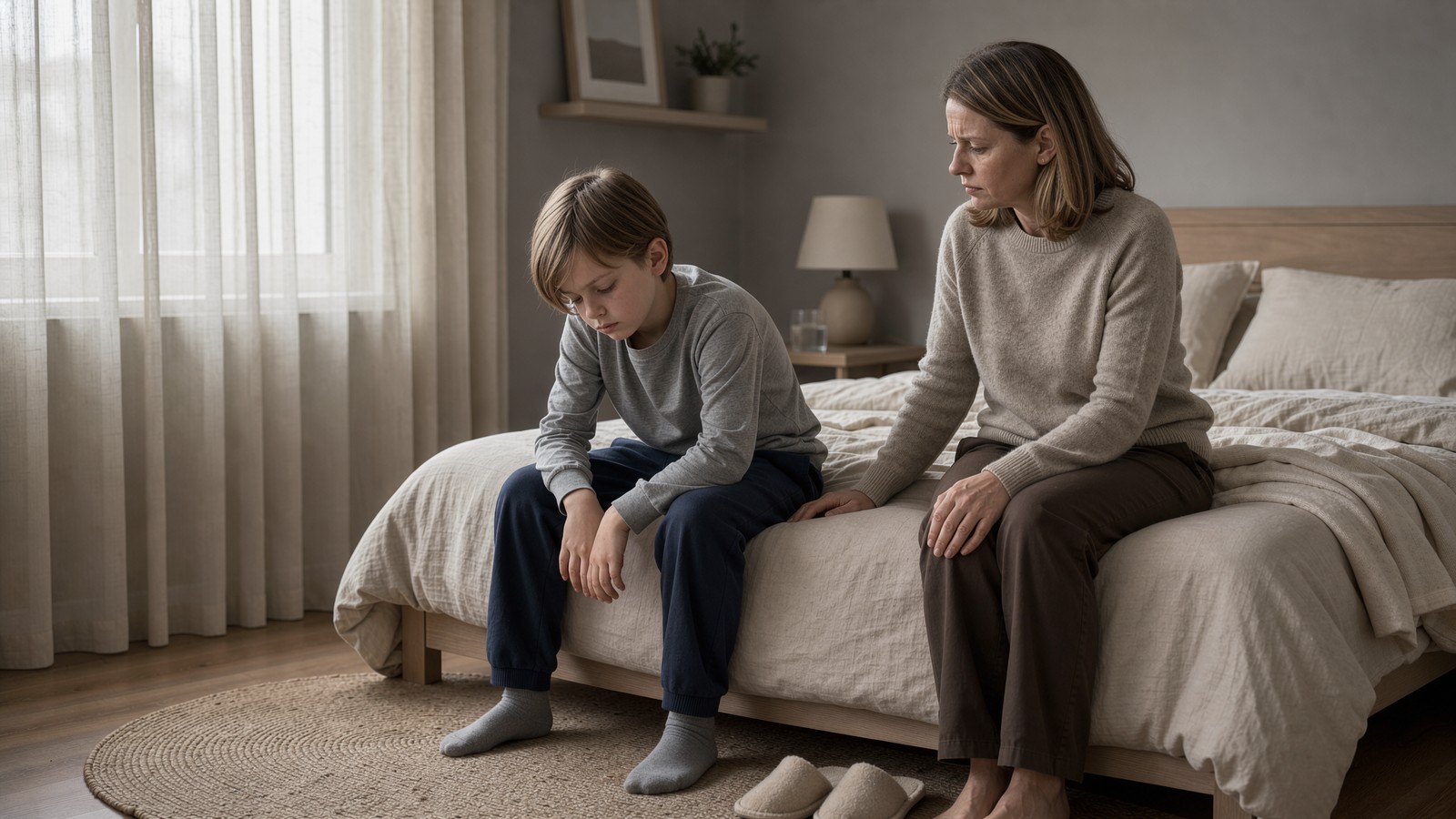
When Anxiety Shows Up as Stomachaches and Headaches in Children
Anxiety in children doesn't always look like worry. Sometimes, it looks like a stomachache that appears every Monday morning before school, a headache that surfaces before soccer practice, or unexplained muscle tension that doesn't go away with rest. These physical symptoms are not made up, and they're not manipulation. They are real pain: a genuine physiological response to emotional stress.
Among children with diagnosed anxiety disorders, 70% report frequent stomachaches, making it one of the most common ways childhood anxiety manifests physically (Ginsburg et al., 2006). Headaches, muscle tension, rapid heartbeat, and sweating are also widespread, often appearing before the child can verbalize feeling anxious. For many parents, these physical complaints are the first clue that their child is struggling emotionally.
Understanding how anxiety lives in the body, and why children experience it this way, helps you respond with empathy rather than frustration, and recognize when professional support might help.
Why Does Anxiety Cause Physical Symptoms in Children?
Anxiety activates the body's stress response, the fight-or-flight system designed to protect us from danger. When a child's brain perceives a threat (whether it's an upcoming test, separation from a parent, or social uncertainty), it signals the body to prepare for action. Blood flow shifts away from the digestive system (causing stomachaches), muscles tense in preparation to move (causing headaches and body aches), the heart races, and breathing quickens.
These changes are not under conscious control. A child experiencing anxiety-related stomach pain is feeling genuine discomfort. According to the National Institute of Mental Health, children and teens with generalized anxiety disorder may experience headaches, muscle aches, stomachaches, or tension as core symptoms of the condition (NIMH).
Young children, in particular, often lack the vocabulary to name emotions like "worried," "nervous," or "overwhelmed." Instead, they report what they can feel: "My tummy hurts" or "My head feels bad." The Child Mind Institute notes that these physical symptoms may be the first evidence a parent has that a child is anxious, especially when the symptoms appear regularly before stressful events (Child Mind Institute).
The gut-brain connection is especially strong. The digestive system is highly sensitive to stress hormones, which is why stomachaches are one of the most prevalent somatic symptoms of anxiety in children. In one study, restlessness and stomachaches were identified as the most commonly reported physical complaints among anxious youth (Ginsburg et al., 2006).
What Do Anxiety-Related Physical Symptoms Look Like?
Not every headache or stomachache signals anxiety, but certain patterns can help you distinguish anxiety-driven symptoms from other causes:
Timing and Triggers
Anxiety-related physical symptoms tend to appear before or during stressful events. Your child might complain of a stomachache every Sunday night before the school week starts, develop a headache before a birthday party, or feel nauseous on the morning of a field trip. The pain often lessens or disappears once the triggering situation passes or is avoided.
If your child frequently asks to stay home from school due to physical complaints but feels fine once they're allowed to skip, that pattern warrants attention, not punishment. The relief they feel is genuine, but the root cause may be anxiety about school rather than a physical illness.
Recurring, Unexplained Complaints
Children with anxiety often report the same physical symptom repeatedly: stomachaches several times a week, tension headaches that appear in clusters, or generalized body aches with no clear injury. A medical evaluation finds no physical cause, yet the child insists the pain is real. And it is. Anxiety lives in the body, and somatic symptoms are one of its most common expressions in children.
Multiple Physical Symptoms
Anxiety rarely produces just one symptom. A child might experience stomachaches alongside headaches, sweating, trembling, or a racing heart. According to research on somatic symptoms in anxious children, common physical complaints include blushing (51%), heart palpitations (48%), muscle tension (45%), sweating (45%), and trembling or shaking (43%) in addition to the more prevalent stomachaches and restlessness (Ginsburg et al., 2006).
Physical Complaints Combined with Behavioral Changes
Physical symptoms rarely appear alone. Watch for patterns: Is your child also more clingy, irritable, or withdrawn? Are they avoiding activities they used to enjoy? Do they ask repeated reassurance-seeking questions? Physical symptoms combined with behavioral changes suggest anxiety may be the underlying issue.
How Can You Tell If It's Anxiety or Something Else?
The first step is always to rule out medical causes. If your child complains of frequent stomachaches or headaches, consult your pediatrician. Blood work, examinations, and sometimes imaging can confirm whether a physical condition is responsible.
If medical tests come back normal and symptoms persist, especially when they follow a pattern tied to stress or appear before anxiety-provoking situations, anxiety is a likely explanation. The American Psychological Association notes that children who struggle with anxiety commonly report headaches and stomachaches where there's no medical cause, along with physical signs like sweating, rapid heartbeat, and changes in appetite or sleep (APA).
It's also possible for anxiety and a medical condition to coexist. A child with a genuine digestive issue might also experience worsening symptoms when anxious. Working with both your pediatrician and a mental health professional ensures you address the full picture.
When Should You Seek Help?
Not every anxious child needs therapy, but certain signs indicate that anxiety is interfering with daily life and professional support would help:
- Physical symptoms occur multiple times per week and disrupt school, activities, or sleep
- Your child frequently avoids situations due to physical complaints (school refusal, skipping social events, dropping activities)
- Reassurance and problem-solving at home aren't reducing the symptoms
- Your child seems distressed, withdrawn, or less engaged in life than before
- Physical symptoms are accompanied by other anxiety signs: excessive worry, clinginess, irritability, sleep disturbances, or difficulty concentrating
Approximately 15-20% of children and adolescents meet the criteria for an anxiety disorder (Chiu, Falk, & Walkup, 2015), and somatic symptoms are particularly common among children with generalized anxiety disorder. Early intervention matters. Anxiety doesn't simply resolve with time, and untreated anxiety in childhood is linked to ongoing mental health challenges in adolescence and adulthood.
How Therapy Helps Children With Somatic Anxiety Symptoms
Therapy for childhood anxiety, particularly cognitive-behavioral therapy (CBT), teaches children to recognize the connection between their thoughts, feelings, and physical sensations. A child learns that the stomachache before school is their body's way of saying "I'm worried," and they develop tools to manage the worry rather than avoid the situation.
Play therapy is especially effective for younger children who struggle to verbalize emotions. Through play, children express and process anxiety in ways that feel natural to them, building coping skills without needing to articulate complex feelings. Art therapy offers a similar outlet, allowing children to externalize emotions through creative expression.
For children whose anxiety produces significant physical symptoms, a therapist might also use somatic techniques: helping the child notice where anxiety lives in their body, practice deep breathing to calm the nervous system, and develop a sense of safety in their physical experience.
Family involvement strengthens treatment. Parents learn how to respond to physical complaints with empathy and validation while gently encouraging the child to face anxiety-provoking situations rather than avoid them. Research shows that about 80% of children receiving combination treatment for anxiety show clinically meaningful improvement in their symptoms and functioning (APA).
What You Can Do at Home
While therapy provides structured support, there are strategies you can use at home to help your child manage anxiety-related physical symptoms:
Validate the pain. Never dismiss your child's complaints as fake or exaggerated. Say, "I believe your stomach hurts. Let's figure out what's happening." Validation builds trust and opens the door to exploring whether worry might be contributing to the discomfort.
Name the anxiety. Help your child make the connection: "Sometimes our bodies feel bad when we're worried about something. Is there anything on your mind about today?" Even if they can't articulate the worry, you've planted the idea that emotions and physical sensations are connected.
Teach simple calming techniques. Deep breathing, progressive muscle relaxation, and visualization can reduce physical symptoms in the moment. Practice these skills when your child is calm so they're familiar when anxiety strikes.
Avoid reinforcing avoidance. If your child's stomachache leads to staying home from school repeatedly, the pattern can strengthen. Anxiety thrives on avoidance. Work with your child's school and a therapist to create a plan that balances compassion with gentle encouragement to attend, even when discomfort is present.
Model healthy stress management. Children learn by watching. When you experience stress, name it aloud and demonstrate how you cope: "I'm feeling tense about this deadline. I'm going to take a walk to clear my head." Showing that stress is normal and manageable teaches your child to do the same.
Recognizing the Pattern
When your child complains of a stomachache or headache, the instinct is often to treat the symptom: offer medicine, suggest rest, or let them skip the activity causing distress. But when the pattern repeats, when the pain appears before stressful events and disappears when the event is avoided, and when medical evaluations find no physical cause, it's time to consider whether anxiety is the real source.
Anxiety in children is common, treatable, and nothing to be ashamed of. Physical symptoms are not weakness or manipulation. They are a child's nervous system responding to stress in the only way it knows how. With the right support, children learn to recognize anxiety when it shows up in their body, develop tools to manage it, and move through challenges rather than around them.
If your child's physical complaints are frequent, distressing, or interfering with school and activities, reaching out for professional support is a sign of strength, not alarm. Life Enrichment Counseling Center offers children's counseling, play therapy, and family therapy to help children and families understand and manage anxiety. Our therapists work with children across Northern Virginia (in Gainesville, Alexandria, and Haymarket) and Port St. Lucie, FL, as well as online. Contact us to schedule a consultation and take the first step toward helping your child feel better in mind and body.
References
- American Psychological Association. (n.d.). Treating anxiety in children. https://www.apa.org/research/action/speaking-of-psychology/children-anxiety
- Child Mind Institute. (n.d.). Children's anxious stomach aches & headaches. https://childmind.org/article/anxious-stomach-aches-and-headaches/
- Chiu, A., Falk, A., & Walkup, J. T. (2015). Anxiety disorders among children and adolescents. Focus, 14(1), 26-38. https://doi.org/10.1176/appi.focus.20150029
- Ginsburg, G. S., Riddle, M. A., & Davies, M. (2006). Somatic symptoms in children and adolescents with anxiety disorders. Journal of the American Academy of Child & Adolescent Psychiatry, 45(10), 1179-1187. https://pubmed.ncbi.nlm.nih.gov/17003663/
- National Institute of Mental Health. (n.d.). Generalized anxiety disorder: What you need to know. https://www.nimh.nih.gov/health/publications/generalized-anxiety-disorder-gad