When Busy Becomes Harmful: Rethinking Children's Activity Schedules
The problem isn't that children are busy. It's that we've convinced ourselves that being busy is the same thing as growing up well.
Every August, as families across Northern Virginia and Port St. Lucie finalize fall schedules, we watch the same pattern repeat: parents signing children up for soccer, piano, tutoring, robotics, language classes—sometimes all at once—driven by the belief that more activities equal better outcomes. The cultural message is clear: good parents fill their children's calendars. Idle time is wasted time. Children who aren't constantly engaged are falling behind.
But here's what we see in our clinicians' offices: children arriving exhausted, anxious, and disconnected—not despite their packed schedules, but because of them. The very activities meant to build resilience are crowding out the unstructured time where resilience actually develops.
What the Research Actually Says
Before dismissing this as a simple "kids need less" argument, it's worth looking at what the evidence shows. Extracurricular activities themselves are not the problem. Research consistently finds that children who participate in sports, arts, or structured programs report lower anxiety, fewer depressive symptoms, and higher self-esteem compared to peers who don't participate at all. During the COVID-19 pandemic, students who stayed involved in activities showed better mental health outcomes than those who withdrew entirely.
The benefit is real—but it's not linear. More activities don't produce more benefit, and at some threshold, the protective effect reverses.
Dr. Jerry Bubrick, a clinical psychologist specializing in childhood anxiety at the Child Mind Institute, frames the question plainly: "Can you still do your homework? Can you still get 8+ hours of sleep each night? Can you still be a part of your family?" If the answer to any of those is no, it's too much—even if it's only one activity. For some children, a single intensive commitment like competitive sports or theater is all their schedule can hold. For others, several lighter activities work fine. There's no magic number, but there is a clear principle: when activities start displacing the fundamentals—sleep, homework, family connection, downtime—the cost outweighs the benefit.
Yet many families keep adding commitments long past that point, not because the child is thriving, but because stopping feels like giving up.
The Thing We've Lost: Unstructured Time
Here's the part that gets lost in the extracurricular arms race: the most critical developmental work of childhood doesn't happen in organized activities. It happens in the margins.
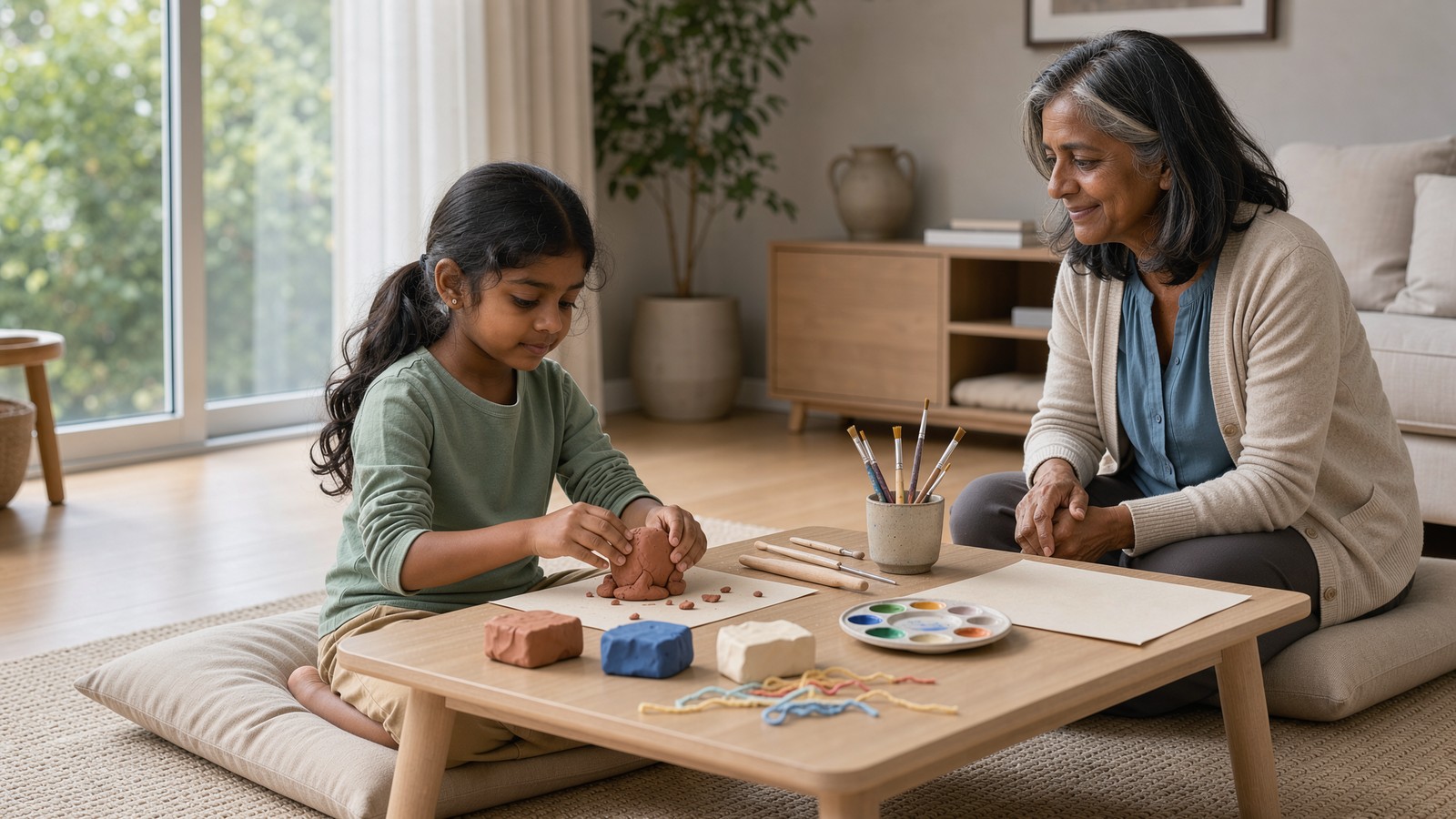
Unstructured play—the kind that isn't organized by adults, doesn't have a predetermined outcome, and doesn't involve a performance or competition at the end—supports development across every domain that matters. According to research synthesized by the American Psychological Association, unstructured play builds physical health, teaches emotional regulation, develops problem-solving and social skills, and fosters creativity. Active play like backyard tag reduces tension and anxiety. Risky play—climbing, jumping, testing physical limits in safe ways—teaches children to assess risk and manage emotions. Pretend play helps children process experiences and try on different identities.
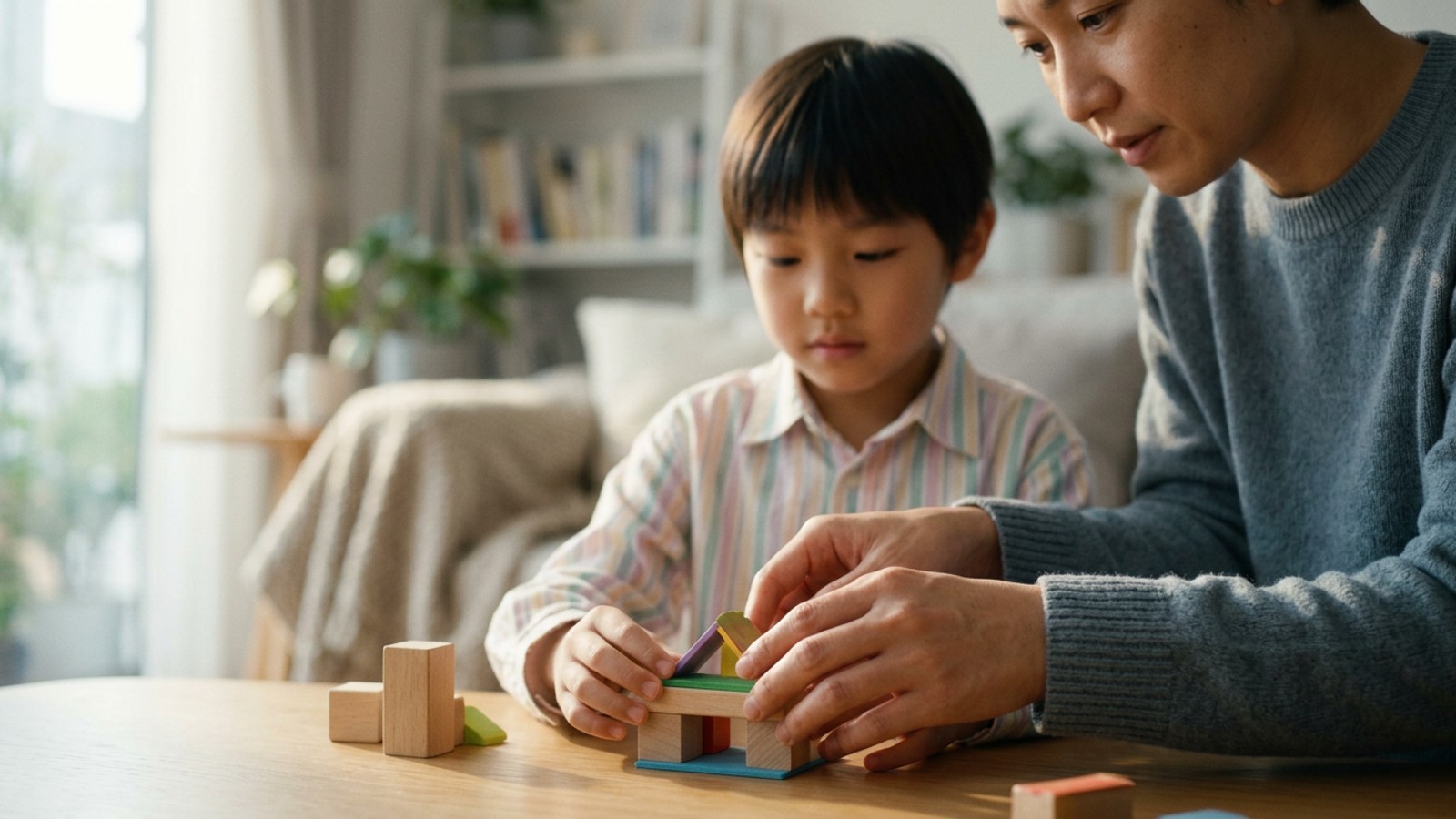
Dr. Lauren McNamara, an educational psychologist with the Recess Project Canada, describes play as "an important catalyst to relieve stress... an important time for families to stay connected and feel emotionally secure together." Dr. Timothy Davis at Harvard Medical School adds that parent-child play "is important in maintaining a strong relationship and strong attachment between parent and child, which fosters resilience."
A 2024 qualitative study of caregivers and play facilitators found broad consensus: unstructured, risky play promotes health and development and offers opportunities for enjoyment, exploration, and social interaction that structured activities simply don't replicate (McCormack et al., 2024). But here's the tension the researchers also documented—even caregivers who valued unstructured play often pushed for more structured, adult-led activities because that's what felt like "real" enrichment.
We've internalized the belief that if an adult isn't directing it, it doesn't count.
What We See in Practice
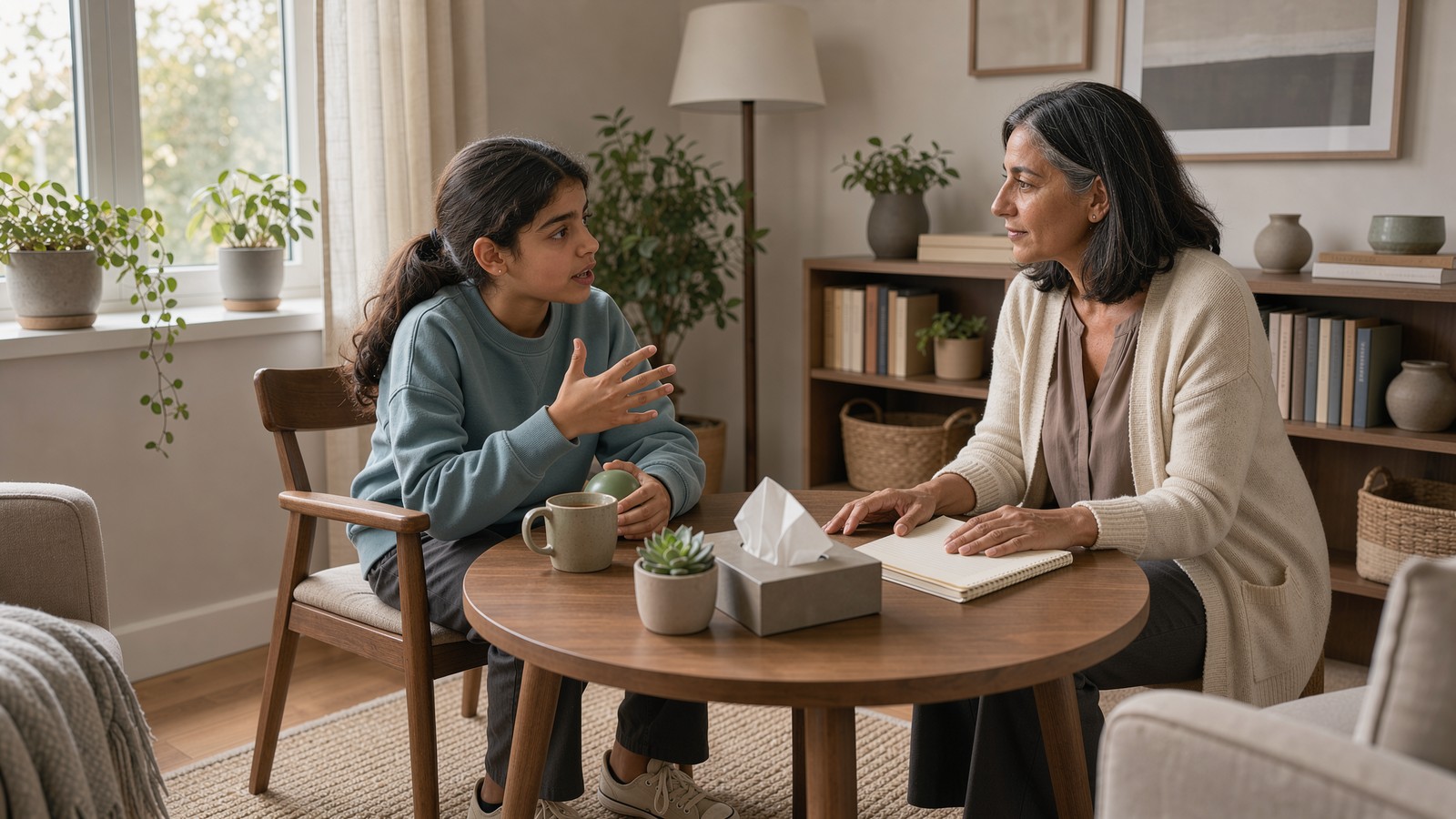
In our work with families over the past two decades, we've watched this dynamic play out in predictable ways. A parent brings in a child struggling with anxiety, and when we map out the week, there's no white space. Monday: soccer practice. Tuesday: math tutoring. Wednesday: music lesson. Thursday: soccer again. Friday: playdate (scheduled three weeks in advance). Saturday: game day. Sunday: homework catchup and prep for the week ahead.
When we suggest scaling back, the parent's first response is often alarm. But she loves soccer. But he's behind in math. But all her friends are in the program. And those things may all be true. But what's also true is that the child sitting across from us is having stomachaches before school, melting down over minor transitions, and waking up at night worrying about forgetting something.
The anxiety isn't coming from one activity. It's coming from a system that never stops, never rests, and never allows the child to simply be without performing, improving, or optimizing.
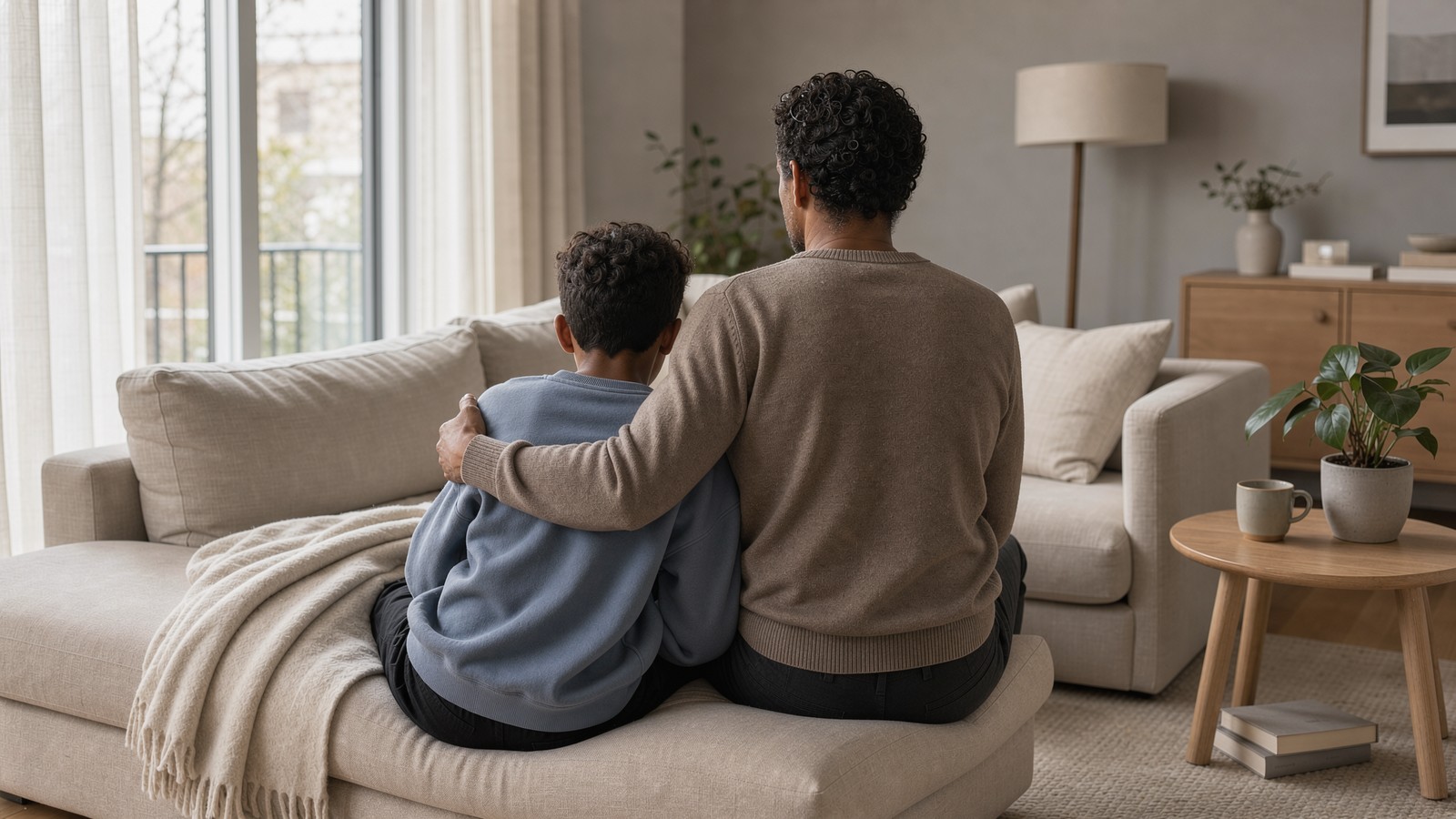
Children—especially those already predisposed to anxiety—need predictable downtime to regulate their nervous systems. They need hours in the week where nothing is expected of them, where they can follow their own curiosity, get bored, figure out how to entertain themselves, and reconnect with family without it being a scheduled "quality time" event. That's not lazy parenting. It's essential parenting.
Dr. Natasha Cabrera, a developmental psychologist at the University of Maryland, cautions parents against being too intrusive in their children's play and routines, noting that "happy kids are easier to manage." The implication is clear: children who have space to decompress, to play freely, and to exist without constant adult direction develop better emotional regulation and require less external management.
But we've built a culture that makes giving children that space feel irresponsible.
The Real Question Isn't "How Many Activities?"
It's "What are we actually trying to build?"
If the goal is raising resilient, emotionally healthy, creative, socially skilled children who can think independently and manage stress—then the evidence is clear. Those capacities don't develop in structured, adult-supervised environments alone. They develop when children have the time and autonomy to navigate boredom, negotiate conflict with peers, take manageable risks, and pursue their own interests without an audience or a grade.
Social psychologist Susan Newman emphasizes that "most children find their level and their interest if they have the time to do it." But they need the time. And they need parents who trust that empty space on a calendar isn't a failure—it's a feature.
This doesn't mean pulling children out of everything. It means being intentional about what stays and what goes. It means asking not "Is this a good program?" but "Does this fit into a schedule that still allows my child to sleep enough, complete their schoolwork without panic, spend unstructured time with family, play freely, and have margin for the unexpected?"
It means recognizing that when your child says "I'm tired" or "I don't want to go," that's data—not defiance.
A Different Way Forward
The cultural narrative around childhood enrichment has become unmoored from what actually enriches children. We've conflated "busy" with "thriving," "scheduled" with "successful," and "more" with "better." But the children in our offices—anxious, exhausted, disconnected from what they actually enjoy—tell a different story.
Rethinking your child's fall schedule isn't about doing less for the sake of less. It's about doing less so there's room for more of what matters: sleep, play, family meals, boredom, creativity, rest. It's about building a childhood that doesn't require constant recovery.
As you finalize fall commitments this week, consider what you're actually optimizing for. If it's a well-rounded resume, keep adding. If it's a well-regulated, emotionally healthy child who can think for themselves and manage stress, then maybe it's time to protect the margins.
If your family is caught in the overscheduling cycle and you're noticing signs of stress, anxiety, or emotional overwhelm in your child—or if you're struggling with how to create healthier boundaries around activities and downtime—our team at Life Enrichment Counseling Center can help. We work with children, adolescents, and families to build resilience, reduce anxiety, and create sustainable routines that support mental health. Reach out to our offices in Gainesville, Alexandria, or Haymarket, VA; Port St. Lucie, FL; or connect with us online.
References
American Psychological Association. (2023, September 26). The many wondrous benefits of unstructured play. https://www.apa.org/topics/children/kids-unstructured-play-benefits
Child Mind Institute. (n.d.). How many after school activities should a child do? https://childmind.org/article/finding-the-balance-with-after-school-activities/
McCormack, G. R., Naish, C., Petersen, J., Ghoneim, D., & Doyle-Baker, P. K. (2024). It is child's play: Caregiver and playworker perspectives on a community park-based unstructured play program. PLoS One, 19(9). https://pmc.ncbi.nlm.nih.gov/articles/PMC11441671/